Winemaking equipment checklist: 12 essentials for beginners
By SamuelPublished September 8, 2026 · 9 min read
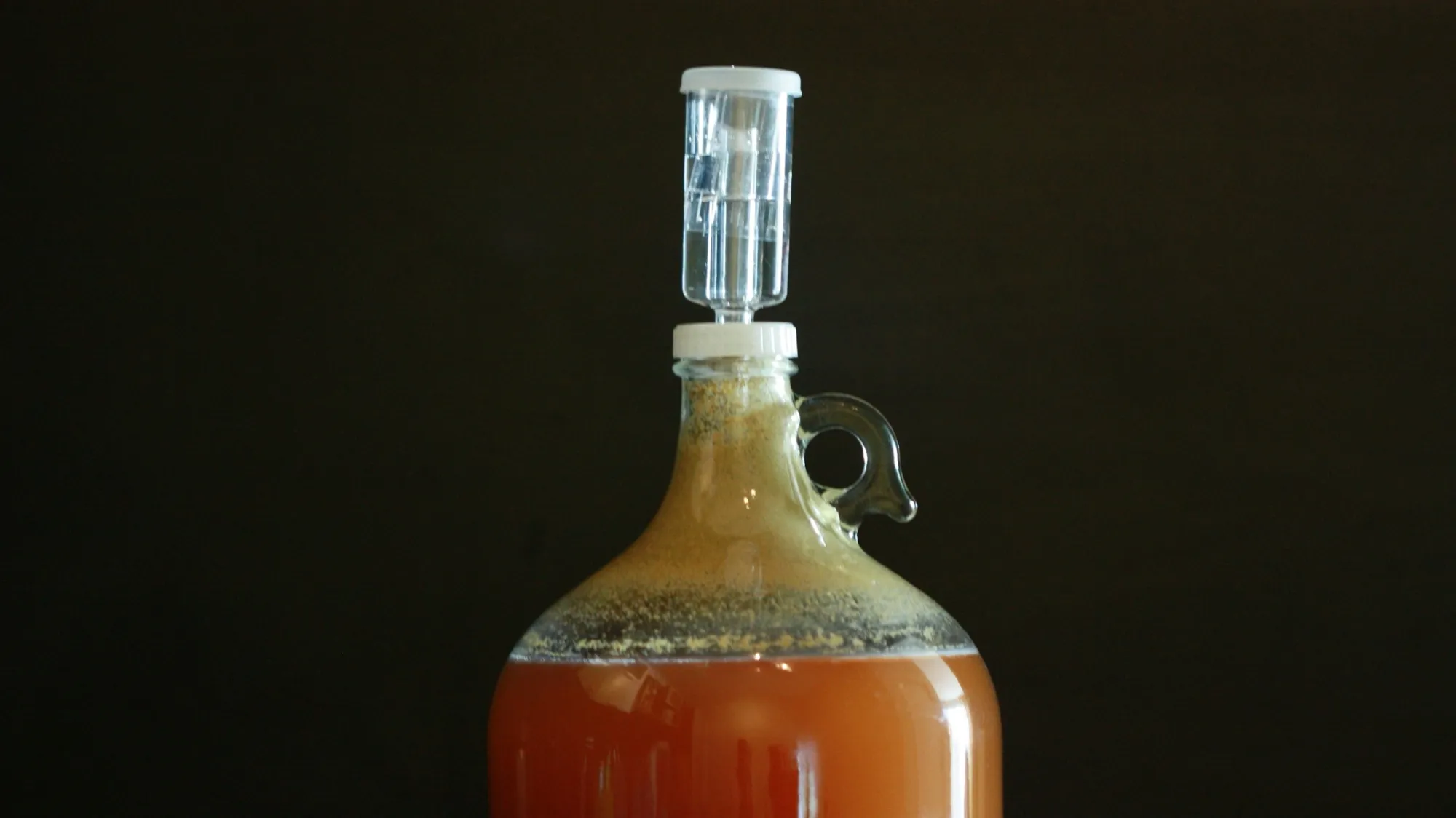
A carboy with an airlock was my first purchase of winemaking equipment. Photo: Kristian Hunt on Unsplash.
When I got into wine, I was lucky enough to come across a man who was selling all of his winemaking equipment, which he had used for about ten years. Without him, it would have been nearly impossible for me to tell the essential from the superfluous, especially since online, resources are scattered and contradict one another.
So here I am writing the guide I wish I had had all those years ago: the good places to buy equipment, what equipment you really need to make wine at home, and how equipment affects the quality of the wine. As a bonus, my opinion on home wine kits…
Where to find your equipment?
There are plenty of good places in Montréal and online to find home winemaking equipment:
La Choppe à Barrock (site in French): Ideally located in the heart of Montréal, on the Plateau-Mont-Royal, La Choppe is first and foremost a homebrewing shop. That doesn’t stop Stéphane, the owner, from carrying plenty of products that are useful for a small “last-minute” project: 29 mm crown caps, sulphites, Oxy-San, champagne yeasts, a filter bag compatible with a press, small 1 and 3 US gallon carboys… It’s my favourite spot because it’s easy to get to by bike.
Mosti Mondiale La Maison du Baril: Located farther in the northeast of the island of Montréal, this shop is a real Aladdin’s cave! You do have to go by car, but once you’re there, there are pretty much all the possible varieties of carboys, corks, yeasts, grape presses… My Italian-made grape press comes from this shop. Worth a visit at least once in your life!
El Nova: Located in Rougemont, in Montérégie, this supplier of industrial equipment keeps food-grade plastic barrels in stock in a variety of sizes, which can be very handy when a volume greater than 6 US gallons (23 L) has to be made into wine. It’s in this kind of barrel that I made my 2025 gamay!
BosaGrape: This is a shop in British Columbia that ships all across Canada. You can find pretty much anything for making wine at home there. That’s where my friend Véronique found a 29 mm crown capper.
Besides these Québec addresses, the attentive reader will have noticed throughout my blog that Amazon.ca also has a wide selection of products. You do have to be careful with some items that can be very expensive, like this 6.5 US gallon carboy!
Home winemaking equipment: the bare minimum
I counted 12 items (or combos of items) that every amateur winemaker absolutely needs in their winemaking space to make wine efficiently:
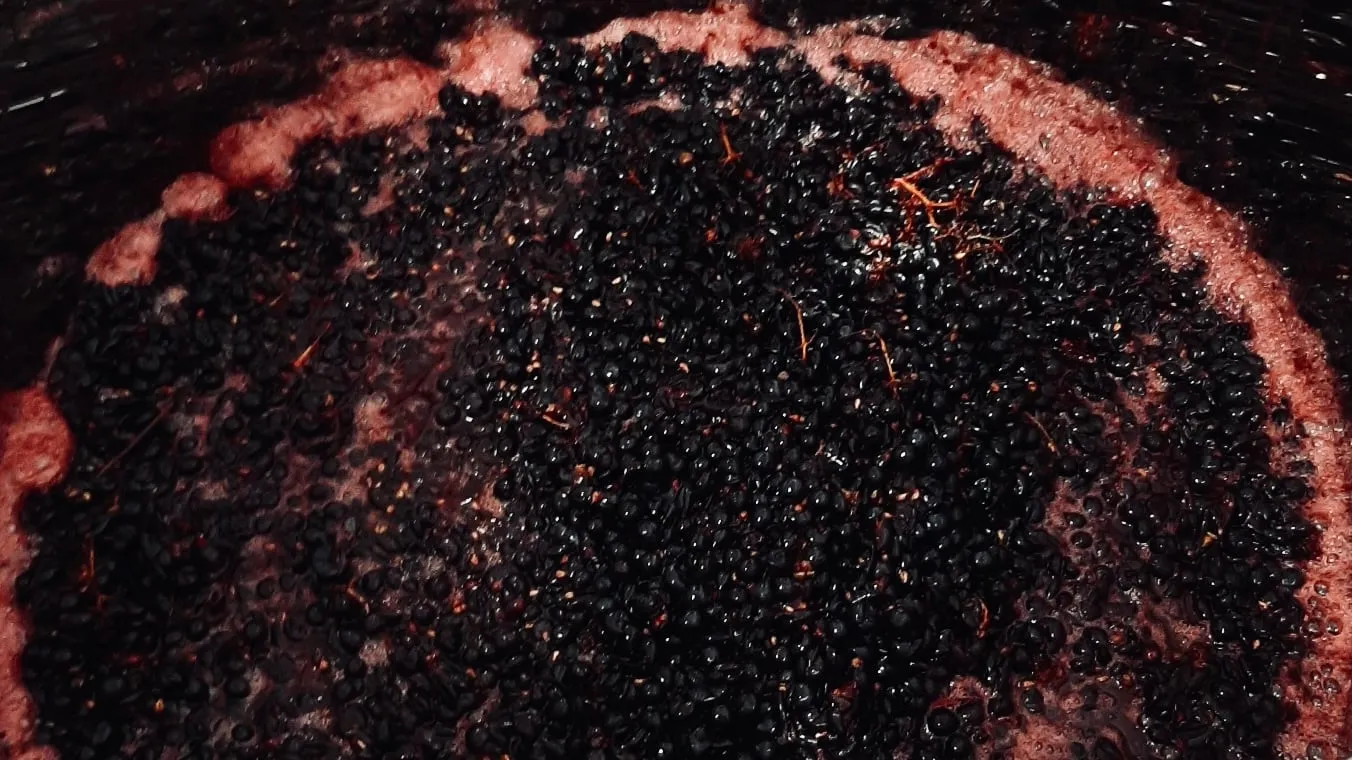
One or more containers suited to fermentation: You need containers that can easily be emptied (vats) while accepting an airlock. Narrow-necked glass carboys only work with direct pressing. For a red or orange wine, where the skins have to stay in contact with the juice, you need a container with a much wider opening, like an El Nova plastic barrel, a small stainless-steel vat or even an assortment of white plastic pails. This lets you easily remove the grapes and their skins from the container when the time comes. Size isn’t critical because during fermentation, the carbon dioxide given off will protect the must. In other words, it’s fine to put 50 L of must in a container that can hold 60 L.
A variety of carboys for aging: It’s very hard to predict exactly how much wine a given quantity of grapes will yield. Also, you absolutely must minimize the amount of air left during aging. For these 2 reasons, it’s better to have carboys in several sizes so you don’t end up like me while making oxymarc, with a half-filled carboy!
Airlocks: Fermentation vats and the carboys used to age wine must both be sealed with a device that lets gas escape. Careful though, airlocks come in different sizes! I recommend buying an airlock at the same time as its vat or carboy to prevent unpleasant surprises.
A grape press: Without this tool, separating the grapes, seeds and stems from the juice is an extremely painful task. What’s more, the total juice yield will be very low without a press, with a good part staying trapped in the skins and pulp. With astrofizz, I went about it with cheesecloth and the strength of my hands… A mistake I will never repeat!
Filter bags: Now that you’ve bought the press, you need to get some bags that will hold back most of the solid particles (seeds, skins, etc.) during pressing. Without them, the press will still work, but the resulting juice will be very muddy and will need to be racked many times. Each racking creates an opportunity to contaminate the wine, on top of reducing the final volume.
A siphon tube and a wine thief: A reusable, inexpensive plastic tube is absolutely essential for moving the wine from one container to another (racking) and for bottling without too much splashing. As for the wine thief, it lets you transfer a small quantity of wine precisely, to taste it or to run a density test.
Sulphites and Oxy-San: Cleanliness is the key to a flawless wine, so you should always keep an oxygen-based sanitizing and cleaning agent on hand, such as Oxy-San (site in French) or One Step. Sulphites can disinfect too, but they show their full usefulness if a fermentation problem comes up or during the bottling of your cuvée.
A refractometer and a hydrometer: Both are important! The refractometer measures the sugar in the grapes and so lets you decide the right time to pick. The hydrometer, for its part, is useful all through fermentation to know when it’s finished. To make a pétillant naturel, a hydrometer is a must-buy.
A corker (or a capper): Without a corker, it’s simply impossible to bottle your wine. For a sparkling wine, a crown capper is also in order.
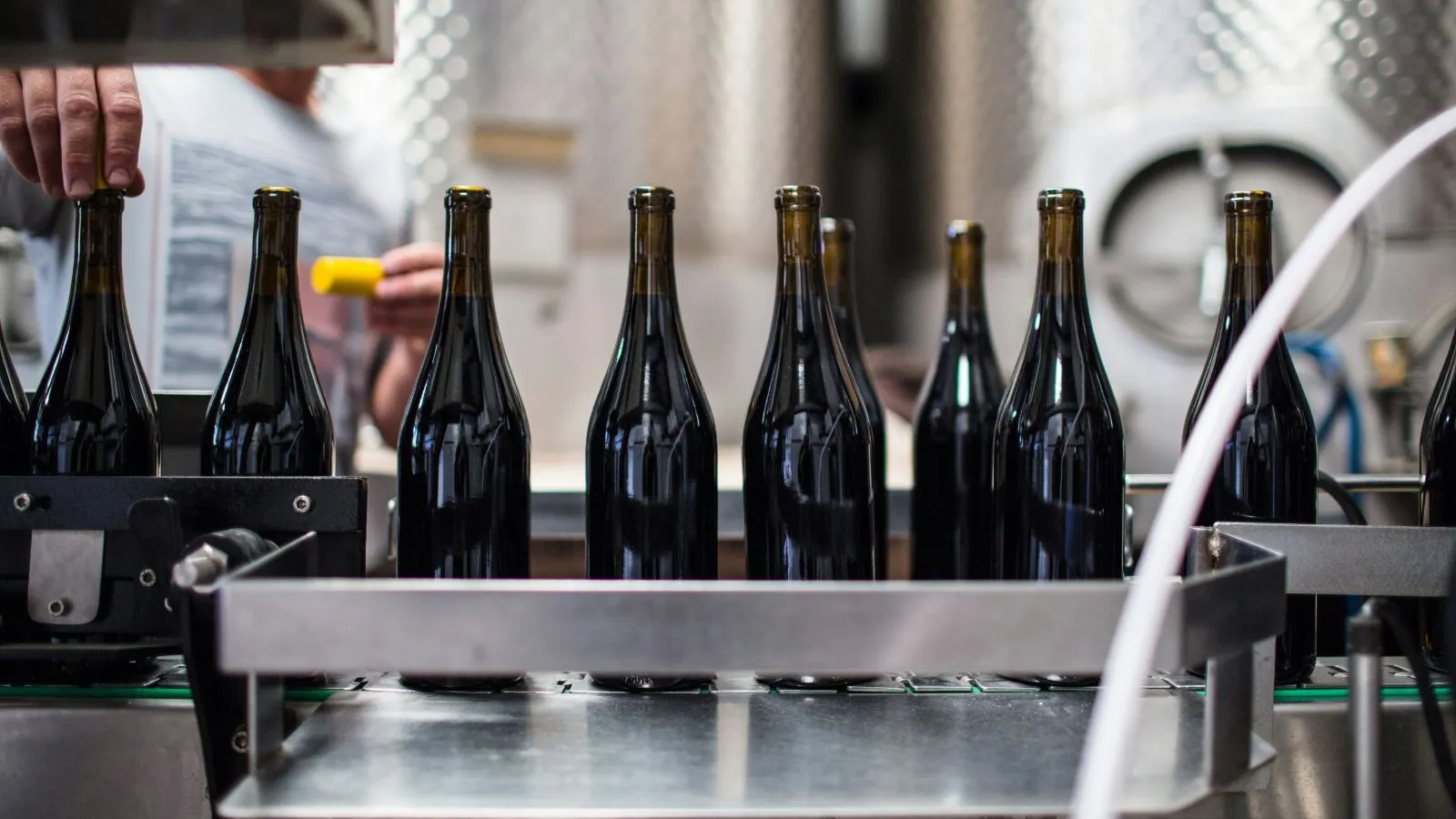
Bottles and corks (or 29 mm caps): Wine shops charge very high prices for these items when bought individually. That’s why I recommend finding a vineyard that will sell you the few dozen bottles and corks you need at a friend’s price. You can also reuse bottles from one year to the next after cleaning them, so you don’t always have to buy more!
White pails (with their lids!): These are used to pick the grapes, protect them from insects and carry them home. The best place to get them cheaply is a Canadian Tire (page in French) or any other big-box hardware store.
Pruning shears: Without a pair of pruning shears, picking grapes is likely to take a long time…
What really changes the quality of the wine
Once you have the basic equipment, investing in pricier equipment won’t necessarily guarantee a better wine: technique and rigour are what will really make the difference. Here are three practical tips along those lines.
Start fermentation as quickly as possible. Once picked, the grape is no longer protected by the vine: a race against the clock begins before unwanted bacteria break it down. If it can’t be crushed quickly, you have to protect it from the sun, or even refrigerate it. If it’s crushed but a maceration is needed, it must be done cold, otherwise fermentation will start too early. And if it’s slow to kick in when the time comes, you need to get it going again as soon as possible.
Minimize contact with air throughout the winemaking: Any contact with air is a chance to oxidize or contaminate your wine. So you have to minimize air contact at all costs at every stage, particularly aging and bottling.
Keep your equipment clean and sanitized: A $5,000 stainless-steel vat that is poorly cleaned will produce a much worse wine than a $100 plastic barrel that is perfectly sterile. Every poorly cleaned piece of equipment creates an opportunity to contaminate your wine, so you have to make cleanliness a true religion.
My opinion on home wine kits
On paper, the argument is hard to beat: no need to wait for the harvest, no press to clean, no nasty surprises with the sugar level. You add water to a grape concentrate, pour in the yeast provided, and three to six weeks later, the wine is ready to drink. The included additive packets (nutrients, acids, tannins, stabilizers) take care of everything else.
But that’s precisely what bothers me. The concentrate comes from grapes harvested who knows where, pressed who knows how and then partially dehydrated before being turned back into juice at the amateur winemaker’s home: there’s no harvest to get right, no decision to make about when to pick, no maceration to calculate. The kit has already made every decision, which removes precisely what makes home winemaking interesting in my view, which is learning to read your grapes, getting it wrong, starting over and understanding why. On top of that, the kit requires adding all sorts of additives, bringing the finished product closer to an industrial wine that is identical from year to year.
I’ve never tasted wine made from a kit, so I won’t comment on the result in the bottle. Some winemakers clearly get perfectly decent wines from them, especially with the premium kits made with whole juice rather than concentrate. But if the goal is to learn how to make wine and not just to drink it, a kit will never teach you anything about the grape itself. And for me, that’s the whole point of this hobby.
Frequently asked questions
How much does the basic equipment cost to get started?
If everything is bought new, expect between $400 and $700. By buying used, the bill can drop dramatically: my first set, picked up from an individual, included all the equipment plus two 6 US gallon carboys and cost me only $60!
Can you use beer brewing equipment to make wine?
Absolutely, because fermentation equipment, siphons and airlocks are shared.
Where do you buy equipment if you don’t live in Montréal?
There are winemaking shops pretty much all over Québec, plus some online ones that ship, such as La Boutique du Vin (site in French), for example. Also, Facebook Marketplace is full of treasures: that’s the platform where I found my first set for $60.
Where do you find grapes if you don’t own a vineyard?
I know of 2 businesses that sell grapes: Raisin L.M. Enr. imports a variety of Californian grapes and Vignoble Les 1001 Vignes grows hybrid grapes for sale. Last I heard, both had prices around $3/kg. Finally, you can also contact vineyards.
Now it’s shopping time!
Written by
Samuel
Apprentice winemaker in Montréal. I share what works here, and above all what goes wrong.
The best of my small-batch winemaking, sent in French every once in a while.
By signing up, you agree to receive La Liste (written in French) and to let me measure your opens and clicks to learn what interests you, until you unsubscribe in one click. See the privacy policy.
I measure the site’s audience with Google Analytics, to see which articles are useful. It sets cookies and sends information about your visit to Google, in the United States, only if you agree. Learn more